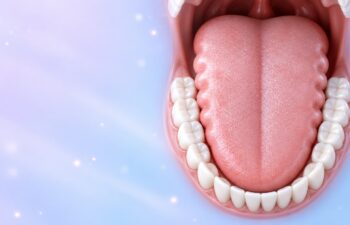
Look in the mirror, stick out your tongue, and check the sides. If you see a wavy, rippled edge that looks like the crust of a pie, you have what is called a scalloped tongue. It is common, it rarely hurts, and on its own it is not harmful. But it is often a clue. Your tongue may be telling you something about how you sleep, how you breathe, or how hard you clench your teeth.
- Not harmful by itselfIt is a sign, not a disease
- Often linked to sleep and clenchingA dentist can check for both
- Usually fadesOnce the cause is treated
The 10-second mirror test
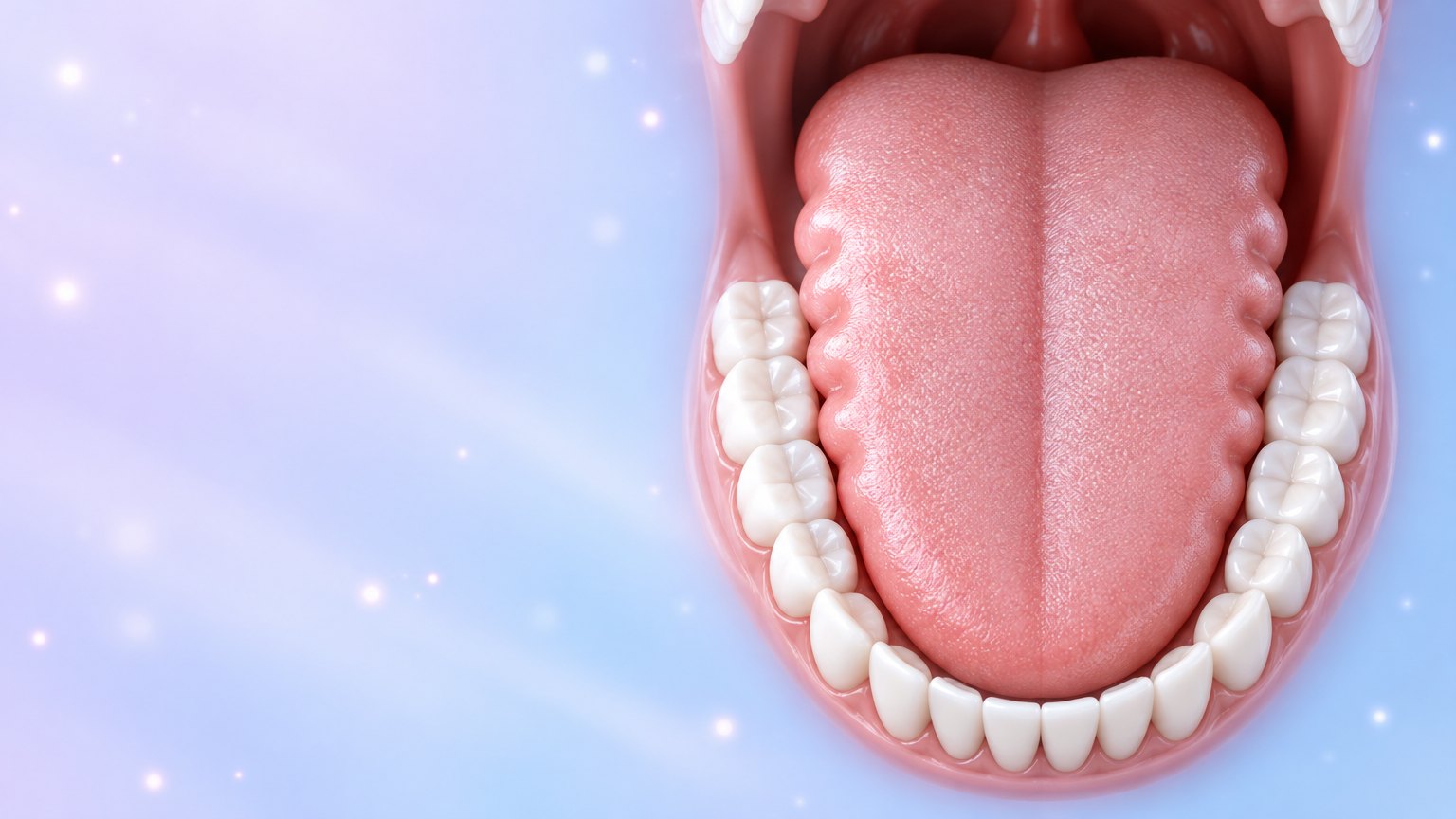
What Does a Scalloped Tongue Look Like?
- Relax and stick out your tongue. Do not push it out hard.
- Look at both side edges. Use good light or your phone camera.
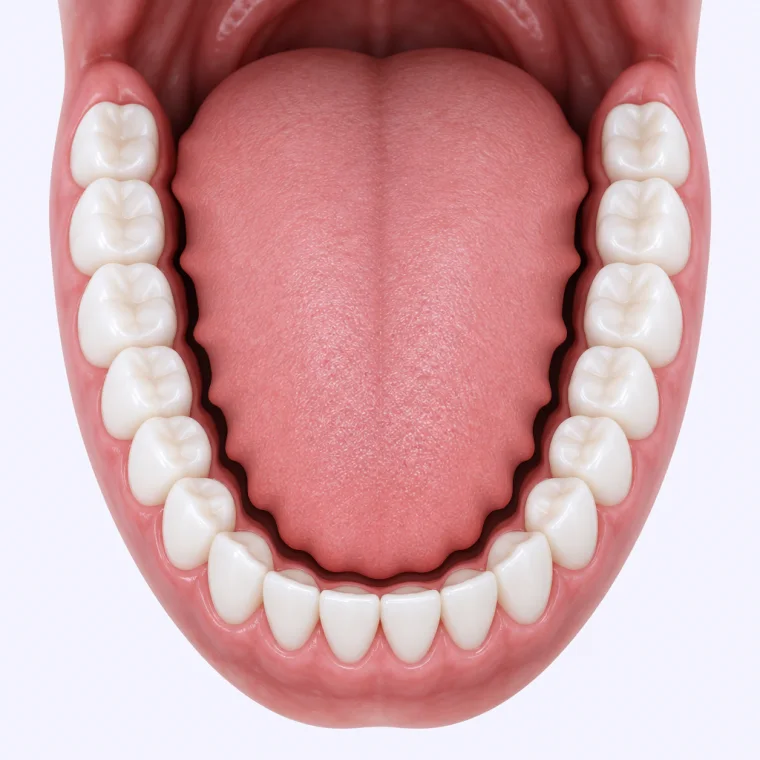
- Check the shape. A smooth curve is normal. A row of small dents, like a pie crust, means scalloped edges.
1The basics
What Is a Scalloped Tongue?
In short: Wavy marks along the sides of the tongue, made by the teeth. It is a sign, not a disease.
A scalloped tongue has teeth marks, or indentations, along its side edges that match the shape of your teeth. You may also hear it called a crenated tongue, a wavy tongue or a “pie crust” tongue. The marks are usually on both sides and are easiest to see when you stick your tongue out.
The marks form when the tongue pushes against the inside of the teeth for hours at a time. That happens for two main reasons: the tongue is larger or more swollen than usual (doctors call an enlarged tongue macroglossia), or the mouth gives it too little room, for example when the upper jaw is narrow.
- Wavy or rippled edges on one or both sides
- Marks that look deeper in the morning
- Mild soreness on the edges (sometimes)
- No pain at all, which is the most common case
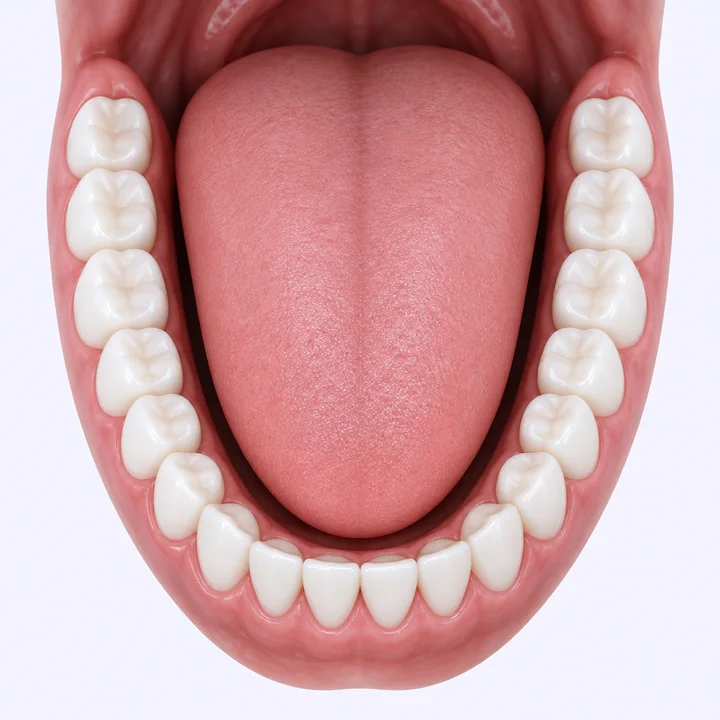
It is not the same as:
Geographic tongue Smooth, map-like patches on top of the tongue that move around over time.
Fissured tongue Deep grooves or cracks on the top surface of the tongue.
A swollen tongue The whole tongue gets bigger, often quickly. Sudden swelling needs urgent care.
2See it happen
How Tooth Marks Form
In short: When the tongue swells or runs out of room, it presses into the teeth and takes their shape.
- RelaxedThe tongue rests with a little space around it. The edges are smooth.
- PressingThe tongue swells or has less room, so it pushes into the teeth for hours.
- Marks stayEven when the tongue relaxes, the wavy tooth marks stay on its edges.
3Why it happens
What Causes a Scalloped Tongue?
In short: Anything that swells the tongue, or pushes it into the teeth, can cause it. Some causes are dental, others need your doctor.
Tap anything that sounds like you. We will show the causes it may point to.
Nothing selected yet. This is a guide only, not a diagnosis.
Sleep apnea and airway problems
When breathing stops and starts during sleep, the tongue often pushes forward to keep the airway open. Low oxygen may also lead to fluid and swelling in the tongue.
Dentist can helpClenching and grinding (bruxism)
Clenching your teeth, day or night, also presses the tongue hard against them. Many people do it without knowing. Flat, worn teeth are a common clue.
Dentist can helpTMJ problems
Problems with the temporomandibular joint (TMJ), the hinge of your jaw, often go hand in hand with clenching and a tongue that sits in the wrong place.
Dentist can helpLow tongue posture or tongue-tie
A healthy tongue rests on the roof of the mouth. If it rests low, pushes forward (tongue thrust), or is held down by a tongue-tie, it spreads out and presses on the lower teeth.
Dentist can helpStress and anxiety
Stress does not change the tongue directly. It leads to habits like clenching and pressing the tongue against the teeth, which leave the marks.
Dentist can helpA narrow jaw
A narrow upper jaw or a high, arched palate leaves the tongue too little room, so it has to squeeze between the teeth.
Dentist can helpLow thyroid (hypothyroidism)
An underactive thyroid can make the tongue larger. Other signs include feeling tired or cold, dry skin and weight gain. A simple blood test checks it.
See your doctorVitamin and iron deficiency
Low levels of vitamin B12, iron, niacin or riboflavin can make the tongue swollen and sore. Your doctor can test for these.
See your doctorDehydration, allergies and smoking
Not drinking enough water, allergic reactions, infections and smoking can all make the tongue swell. So can some medical conditions, such as Sjögren’s syndrome.
Home care or doctor4The big one to rule out
Scalloped Tongue and Sleep Apnea
In short: A scalloped tongue does not prove you have sleep apnea, but the two often show up together. It is worth checking.
Obstructive sleep apnea is when your airway keeps closing during sleep, so breathing stops and starts. Often the tongue is part of the problem. If it is large for the mouth, or the jaw is narrow or set back, the tongue can fall back and block the airway when you lie down.
Researchers have seen the link too. In a 2025 study of 1,261 adults, a scalloped tongue was about twice as common in people with sleep apnea.
40%of people with sleep apnea had a scalloped tongue
20%of people without sleep apnea had one
An earlier study of more than 1,000 adults in Japan found that people with a scalloped tongue were more likely to have drops in oxygen during sleep. This is a link, not proof, which is why a sleep study is still needed.
That is also why a dentist is often the first to notice. A scalloped tongue, worn teeth and a narrow upper jaw are clues we look for at every exam. Learn more about sleep apnea treatment without CPAP at Millennium Smiles.
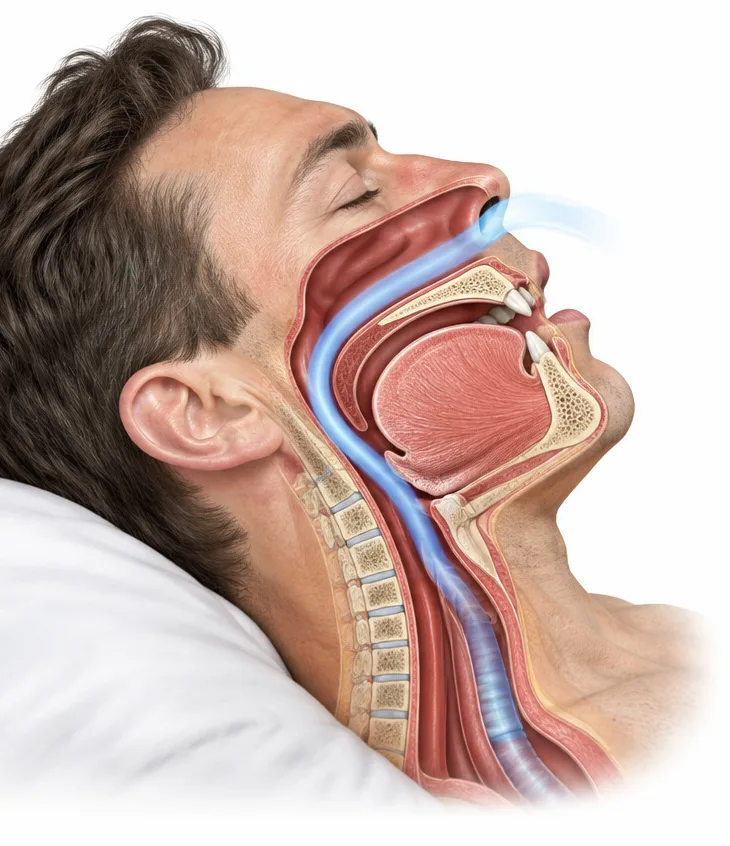
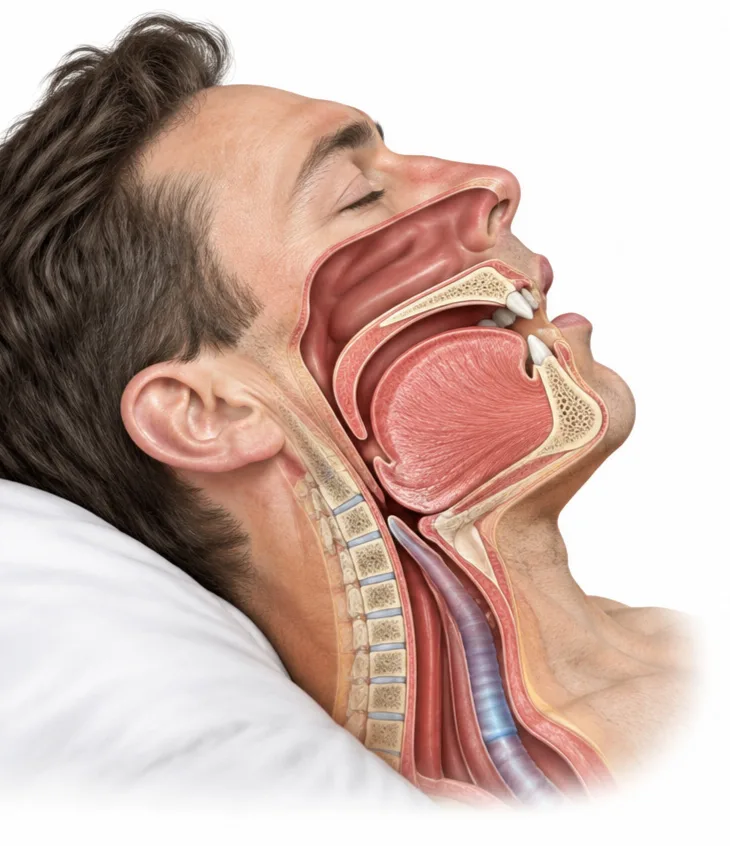
Quick check: sleep apnea signs
Tick anything that is true for you most nights.
5Stress
Can Anxiety Cause a Scalloped Tongue?
In short: Not directly. Stress leads to clenching and tongue pressing, and those leave the marks.
When you are stressed, you may clench your jaw, press your tongue to your teeth, or grind at night, often without noticing. Hours of that pressure can leave a scalloped edge. If your marks come and go with busy or stressful weeks, this may be part of your story.
Try the jaw rest position
- Lips together
- Teeth apart
- Tongue on the roof of your mouth
If you keep catching yourself clenching, a dentist can check your teeth for wear and talk about a custom night guard or TMJ and jaw pain therapy.
6Whole-body health
Scalloped Tongue and Thyroid
In short: A low thyroid can enlarge the tongue. If you have other signs too, ask your doctor for a blood test.
Hypothyroidism means the thyroid gland makes too little hormone. One possible sign is a larger tongue, which then presses on the teeth and picks up their marks. Low vitamin B12 or iron can do something similar.
- Feeling tired most of the time
- Feeling cold when others do not
- Dry skin or weight gain with no clear reason
A dentist does not diagnose thyroid or vitamin problems. We can tell you when your tongue looks enlarged and suggest you see your doctor.
7Fixing it
How Is a Scalloped Tongue Treated?
In short: You treat the cause, and the tongue usually follows.
There is no cream or rinse for tooth marks. The marks fade when the pressure on the tongue goes away. So the first step is always to find out why the tongue is pressing.
For many people the answer is in the mouth: a clenching habit, a tongue that rests too low, a narrow jaw, or an airway that narrows during sleep. For sleep apnea, one option is a custom oral appliance. It holds the lower jaw slightly forward so the tongue cannot fall back.
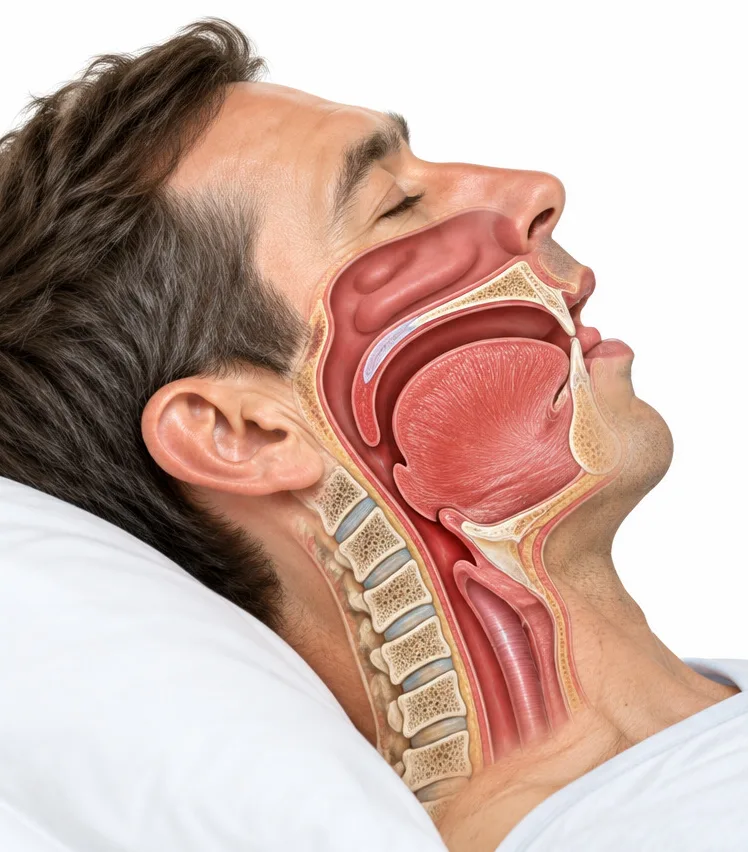
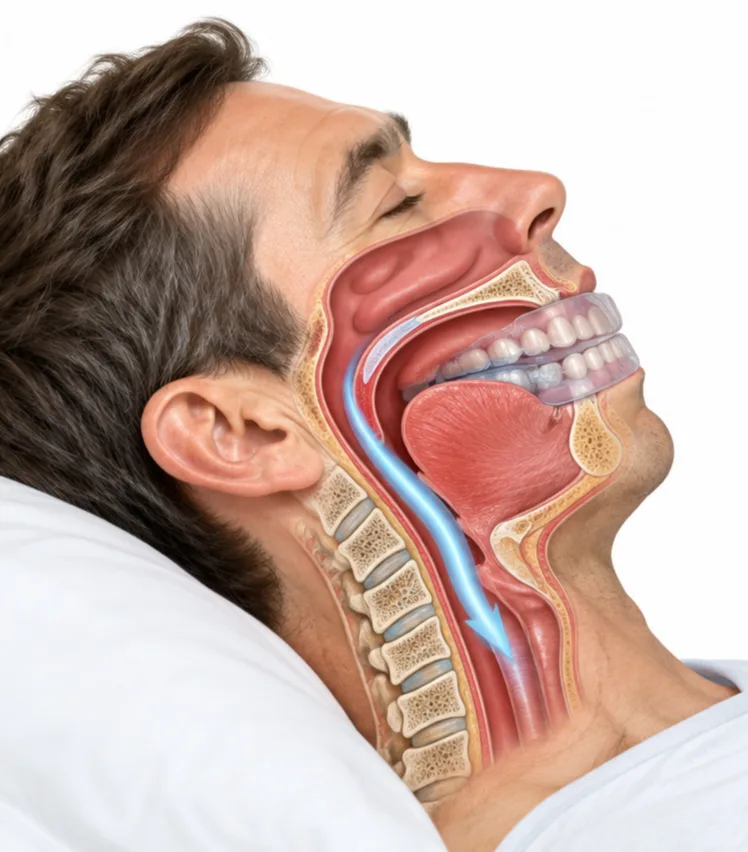
| If the cause is… | Treatment may include | Who helps |
|---|---|---|
| Sleep apnea | A sleep study first. Then a custom oral appliance, CPAP (continuous positive airway pressure), or airway-focused care | Sleep physician and dentist |
| Clenching or grinding | A custom night guard, stress care and bite checks | Dentist |
| TMJ problems | A jaw orthotic, muscle and joint care, and bite correction when needed | Dentist |
| Low tongue posture or tongue thrust | Myofunctional therapy, exercises that retrain the tongue, lips and face muscles | Dentist |
| Tongue-tie | A tongue-tie check and, if needed, a release | Dentist |
| Narrow upper jaw | Jaw expansion for suitable patients, to give the tongue more room | Dentist |
| Thyroid, vitamins or allergies | Blood tests, medicine or supplements | Your doctor |
8Start today
What You Can Do at Home
In short: These steps ease the pressure on your tongue while you find the cause.
Home steps help, but they cannot treat sleep apnea, a narrow jaw or a thyroid problem. If the marks stay after 2 to 3 weeks, get them checked.
- Drink enough water. Keep a bottle nearby and sip through the day.
- Practice resting tongue posture. The whole tongue sits gently on the roof of the mouth, with the tip just behind the upper front teeth.
- Catch the clench. Set a reminder to check: lips together, teeth apart.
- Sleep on your side. Lying on your back makes it easier for the tongue to fall back.
- Skip smoking and late alcohol. Both irritate tissues and can worsen snoring.
- Watch for changes. Take a photo of your tongue each week to see if the marks get better or worse.
9At our office
How Dr. Korous Checks a Scalloped Tongue
In short: We look at the tongue, the teeth, the jaw and the airway together, then explain what we find.
- Talk about your sleep and habits. Snoring, morning headaches, clenching and how rested you feel.
- Look at the tongue and teeth. The depth of the marks, tooth wear, the shape of the palate and the jaw.
- Check tongue movement. Tongue posture, swallowing and whether a tongue-tie is limiting it.
- See the airway in 3D. A CBCT (cone beam computed tomography) scan shows the jaw, the joints and the airway.
- Make a plan. If sleep apnea is likely, we refer you for a sleep study. A sleep physician makes the diagnosis, and we build the dental care around it.
Dr. Korous has completed advanced training in airway evaluation, oral appliance therapy, myofunctional therapy and tongue-tie evaluation. You can also read about the Mallampati score, a quick check of how much room is at the back of the mouth.

10Do not wait on these
When to See a Dentist or Doctor
Book a dental visit if
- The marks last more than 2 to 3 weeks
- You snore, wake up tired or have morning headaches
- You clench, grind or have jaw pain
- Your tongue feels too big for your mouth
See a doctor soon if
- Only one side is affected, or there is a lump or a sore that does not heal in 2 weeks
- You also feel very tired, cold or short of breath
- The swelling is painful or keeps getting worse
Call 911 if your tongue suddenly swells and you have trouble breathing or swallowing.
11Quick answers
Scalloped Tongue FAQs
Short answers to the questions patients ask us most. If yours is not here, call either office and we will help.
Yes, it often does. Once the cause is treated, for example clenching, dehydration or sleep apnea, the tongue has less pressure on it and the marks usually fade.
It depends on the cause. Marks from dehydration or a stressful week may fade within days. Marks linked to sleep apnea, a narrow jaw or low thyroid usually stay until that cause is treated.
It can be. Research has linked a scalloped tongue with low oxygen during sleep, but many people with tooth marks do not have sleep apnea. If you also snore or wake up tired, ask about a sleep evaluation.
Not directly. Stress can lead to clenching and pressing the tongue against the teeth, and that pressure leaves the marks.
Low levels of vitamin B12, iron, niacin or riboflavin can make the tongue swell, which can lead to scalloping. A blood test from your doctor can check for these.
Sometimes. An underactive thyroid can enlarge the tongue. If you also feel tired, cold or have dry skin, ask your doctor about a thyroid blood test.
The scalloping itself is not harmful. It is worth checking because it can point to something that needs care, such as sleep apnea, a thyroid problem or a vitamin deficiency.
Mild scalloping is common, and many healthy people notice it now and then. It is still worth mentioning at your next dental visit, because it can be an early clue to clenching or a breathing problem during sleep.
Wavy edges on both sides of the tongue are not a typical sign of cancer. The signs that need a prompt exam are different: a lump, a patch that looks different from the rest of the tongue, or a sore that does not heal within 2 weeks. If you notice any of these, see a dentist or doctor soon.
A white coating can come from a dry mouth, dehydration or oral thrush. Soreness can come from the tongue rubbing on the teeth or from a vitamin deficiency. If either lasts more than 2 weeks, get it checked.
Yes. A dentist can look for clenching, a narrow jaw, tongue-tie and airway signs, and offer care such as night guards, myofunctional therapy and oral appliances. For thyroid or vitamin causes, your doctor is the right next step.
Not Sure Why Your Tongue Has Tooth Marks?
Book a visit with Dr. Dunia Korous, D.D.S., General Dentist, in Frisco, TX. We will check your tongue, teeth, jaw and airway and explain what we find in plain words.
Illustrations are for education only. This article is general information and is not a diagnosis. Results vary from person to person.
Medically reviewed by Dr. Dunia Korous, D.D.S., General Dentist on
Credentials: FICOI (Fellow of the International Congress of Oral Implantologists) and MICOI (Master of the International Congress of Oral Implantologists).
Posted on behalf of