
An overbite, where the upper front teeth go over or overlap the lower ones, is a common dental issue. Ignoring it can cause discomfort and long-term oral health challenges. The good news? You can take steps to address it, including jaw exercises that may help improve your bite. Let’s explore how to correct overbite effectively.
Quick Answer
Jaw exercises can ease the muscle tension and jaw discomfort that often come with a mild overbite. They cannot move teeth or change the jaw bone, so most overbites need clear aligners or braces to be corrected. A short exam tells you which group you are in.
Understanding Overbite: Causes and Symptoms
In short: An overbite is when your upper front teeth cover too much of your lower teeth. Genes, childhood habits, and jaw growth are the usual causes.
Did You Know?
A small overlap of the upper front teeth is normal and healthy. Problems usually start when the overlap is so deep that the lower front teeth are mostly hidden when you bite.
Taking action early can help avoid more serious problems, such as issues with the temporomandibular joint (TMJ).
An overbite isn’t just a cosmetic issue; it can also affect oral function and health. To tackle it effectively, understanding its root causes and symptoms is crucial.
What is an Overbite?
This happens when the upper front teeth overlap the lower teeth excessively. It’s measured in terms of the vertical gap between the upper and lower incisors. While some overlap is normal, an excessive overbite can strain the jaw and teeth.
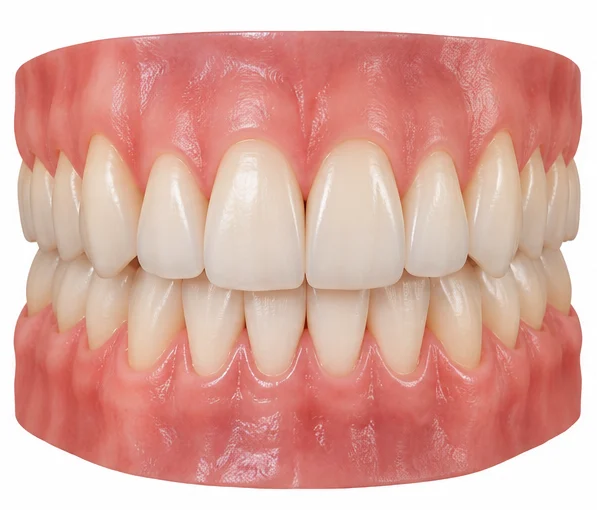
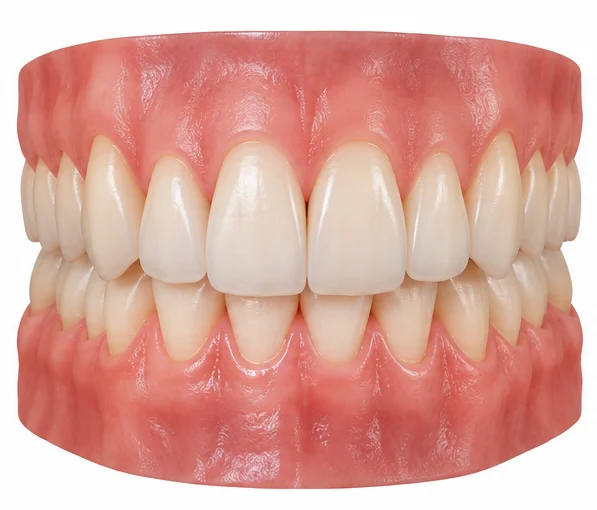
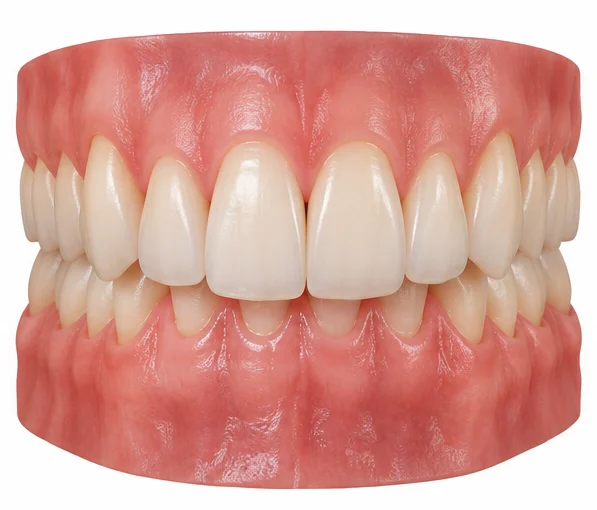
What Causes Overbite?
Several factors can cause this condition, including:
- Genetics: Inherited jaw structure or tooth alignment issues.
- Childhood Habits: Prolonged thumb-sucking, pacifier use, or tongue-thrusting can impact jaw growth.
- Jaw Development: Imbalanced jaw growth or missing teeth may shift the alignment of the bite.
What Are the Symptoms?
Overbites can present with various signs, such as:
- Difficulty or discomfort while biting and chewing.
- Uneven or excessive wear on certain teeth.
- Speech changes, like lisp or difficulty pronouncing certain sounds.
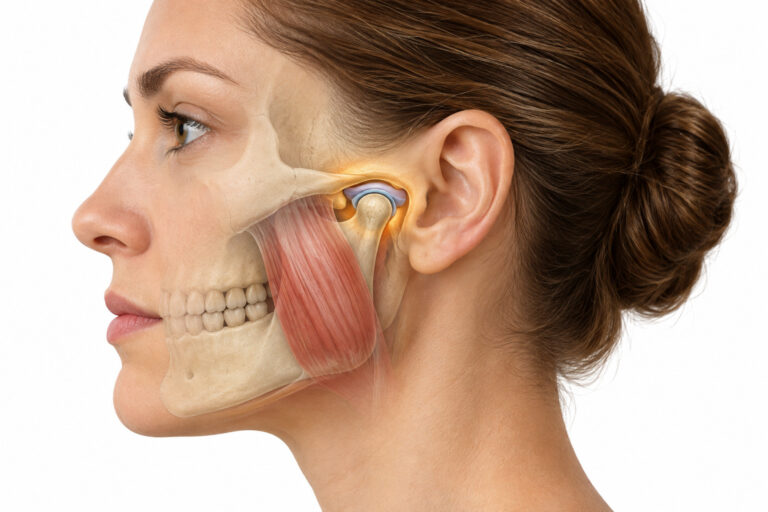
- Jaw pain or tension due to improper alignment.
Overbite vs. Overjet vs. Deep Bite
In short: Overbite and deep bite describe how far your upper teeth cover your lower teeth up and down. Overjet describes how far your upper teeth stick out forward.
Good to Know
Many people have both an overbite and an overjet. A bite check measures each one so your plan fits your bite.
These three words get mixed up a lot, even though they mean different things. Knowing which one you have makes it easier to understand your treatment options.
| Term | What it means | What you notice | Common fix |
|---|---|---|---|
| Overbite | Upper front teeth overlap the lower front teeth from top to bottom | Upper teeth cover part of the lower teeth | None if mild; aligners or braces if deep |
| Deep bite | An overbite that is too deep | Lower front teeth are mostly hidden; they may bite the gum behind the upper teeth | Aligners or braces; jaw expansion in growing kids |
| Overjet | Upper front teeth stick out forward past the lower teeth (often called “buck teeth”) | A front-to-back gap; lips may not close easily | Aligners or braces; habit and growth care in kids |
Treatment Options for Overbite Correction
In short: Treatment depends on how severe the overbite is. Dr. Korous often starts with Phase 1 care, and some moderate to severe cases add Invisalign or braces.
Correcting an overbite involves a mix of treatments, depending on its severity. Modern dentistry offers various solutions to align your teeth and improve jaw function.

Dr. Dunia Korous, D.D.S.General Dentist, Millennium Smiles
How Dr. Korous Treats an Overbite
Her step-by-step approach to correcting an overbite.
-
Phase 1
Jaw Expansion
Gently widens a narrow jaw to make room for the teeth and tongue.
Exercises that train the tongue, lips, and face muscles to rest and swallow the right way.
Lip-Tie and Tongue-Tie Release
Frees a tight band of tissue under the lip or tongue so it can move and rest normally.
-
Phase 2
In some moderate to severe cases
Invisalign or Braces
A second phase of treatment with Invisalign or braces to finish aligning the teeth.
Traditional vs. Alternative Treatments
In short: Braces and clear aligners correct most overbites. Jaw exercises and therapy can help mild cases.

Traditional Treatments
- Braces and Clear Aligners: These are the go-to solutions for most overbites. They gradually move or shift the teeth into proper alignment. Braces are highly effective for moderate to severe cases, while aligners provide a more discreet option.
- Surgery: Severe overbites caused by skeletal misalignment may require orthognathic surgery. This procedure repositions the jaw for improved alignment and function.
Alternative Approaches
- Jaw Exercises: These exercises focus on strengthening and stretching the jaw muscles to improve alignment. While not a replacement for braces or surgery, they work well for mild cases.
How Jaw Exercises Can Help
In short: Jaw exercises can ease tension and support treatment, but they cannot move teeth.
If you have a mild overbite or want to support your treatment plan, jaw exercises can be a valuable tool. They work by improving muscle strength and posture, which can positively influence your bite over time.
The Role of Jaw Exercises
- Strengthening Jaw MusclesStronger muscles can better support the jaw and teeth, reducing strain and promoting proper alignment.
- Improving PostureExercises train your jaw to rest in a healthier position, minimizing the overbite’s impact on your oral function.
- Reducing Jaw TensionStretching exercises can relieve tightness, often linked to overbite discomfort.
Effective Jaw Exercises
Here are a few exercises to get you started:
-
Chin Tucks
- Gently tuck or push your chin towards your neck while keeping your back straight.
- Hold for five seconds and repeat ten times.
- Helps with jaw posture and alignment.
5 sec hold · 10 reps
-
Resistance Training
- Put your thumb under your chin and press upward gently.
- Open your mouth slowly while maintaining pressure with your thumb.
- Repeat ten times to strengthen jaw muscles.
10 reps
-
Jaw Stretches
- Open your mouth wide until you feel a stretch but no pain.
- Hold for a few seconds and close your mouth slowly.
- Repeat eight to ten times daily to improve flexibility.
8–10 reps daily
These exercises work best for mild overbites or as a supplemental strategy. If your overbite causes persistent pain or discomfort, consider exploring TMJ therapy in Frisco, TX, to address any underlying joint issues.
Can You Fix an Overbite Naturally or at Home?
In short: Not fully. At-home steps can ease jaw tension and stop habits that make an overbite worse, but they cannot move teeth or reshape the jaw.
Be Careful
Skip DIY fixes. Rubber bands, pushing teeth with your fingers, or at-home straightening kits used without a dentist can harm the roots and gums.
What at-home steps can do:
- Relax tight jaw muscles
- Ease mild jaw soreness
- Build better tongue and lip posture, with guidance
- Stop habits like thumb sucking, pacifier use, or nail biting
What at-home steps cannot do:
- Move teeth into a new position
- Change the size or shape of the jaw bone
- Correct a deep bite or overjet
The closest thing to a natural fix is myofunctional therapy, guided exercises for the tongue, lips, and face. Dr. Korous uses it as part of Phase 1 care, together with jaw expansion and lip or tongue-tie release when needed.
Exercises or Braces? Who Needs What
In short: Exercises suit mild cases with no pain. Pain, clicking, or a deep overlap usually means you need a bite check.
Jaw exercises may help if you have:
- A mild overbite with no pain
- Jaw tightness or muscle tension
- Braces or aligners already and want extra support
You likely need aligners or braces if you have:
- A moderate or severe overbite
- Crowded or crooked teeth
- Jaw pain, clicking, or popping
- Trouble biting, chewing, or speaking
For Parents
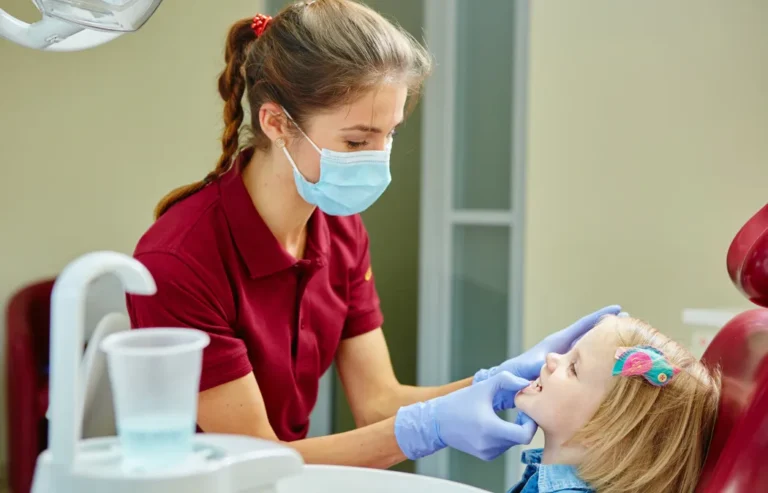
Children ages 7 and up should have their bite checked early. Their jaws are still growing, so treatment can often guide growth instead of correcting it later.
Overbite Treatment Options Compared
| Option | Best for | Typical time | Moves teeth? |
|---|---|---|---|
| Jaw exercises | Mild overbite, jaw tension | Daily, ongoing | No |
| Clear aligners | Mild to moderate overbite | About 6–18 months | Yes |
| Braces | Moderate to severe overbite | About 12–24 months | Yes |
| Jaw expansion | Growing children | Set by your dentist | Guides jaw growth |
| Jaw surgery | Severe overbite caused by the jaw bone | Done along with braces | Repositions the jaw |
Times vary for every patient. Your dentist will give you a personal timeline after your exam.
Are Exercises Enough for You? Quick Self-Check
- Do you have jaw pain, clicking, or popping?
- Is it hard to bite, chew, or say certain words?
- Do your upper front teeth cover most of your lower teeth when you bite?
- Is your child 7 or older with a visible overbite?
If you answered yes to any of these, exercises alone are unlikely to be enough. A bite check will show your best option.
Fixing an Overbite as an Adult
In short: Adults can fix an overbite at any age. Because the jaw has stopped growing, treatment moves the teeth instead of guiding jaw growth.
Before You Start
Healthy gums come first. Your dentist checks your gums and bone before treatment, because teeth move best when the support around them is healthy.
Many adults wait because they think it is too late. It is not. Healthy teeth can move at any age, and treatment often takes about 6 to 24 months.
- Clear aligners (Invisalign): Nearly invisible, removable trays for many mild to moderate cases.
- Braces: For moderate to severe cases or more complex tooth movement.
- Myofunctional therapy: Retrains tongue and lip habits so results stay stable.
- Jaw surgery: Only when the jaw bone itself causes a severe overbite, done along with braces.
Overbite and TMJ / Jaw Pain
In short: A deep overbite can strain your jaw joint and muscles. Not every overbite hurts, but pain, clicking, or headaches are signs to get your bite checked.
Important
Get care quickly if your jaw locks open or closed.
TMJ stands for temporomandibular joint, the hinge that connects your lower jaw to your skull. When a deep bite pushes the lower jaw back, this joint and your chewing muscles can work harder than they should. Problems with this joint are called TMD (temporomandibular disorder).
Signs Your Bite May Be Straining Your Jaw
- Jaw pain or soreness, often in the morning
- Clicking or popping when you open your mouth
- Headaches near the temples
- Worn or chipped front teeth
- Tight jaw muscles or teeth clenching
Gentle jaw stretches and soft foods may ease mild soreness for a short time. If the pain keeps coming back, the bite itself often needs care. Learn more about TMJ and jaw pain therapy.
When to See a Dentist for Overbite Treatment
In short: See a dentist if you have jaw pain, clicking, or trouble eating or speaking.
While at-home care, like jaw exercises, is helpful, some cases require professional intervention. Knowing when to get expert advice can save you from long-term complications.
Signs You Should See a Dentist
- Persistent Pain: Constant jaw or facial pain might indicate that your overbite is affecting your TMJ.
- Clicking or Popping Sounds: These are common signs of joint problems that need attention.
- Severe Misalignment: If your overbite interferes with daily activities like eating or speaking, it’s time to consult a professional.
A dentist can assess your condition and suggest a customized treatment plan. Options like braces, aligners, or surgery might be recommended based on the severity of your overbite.
Why Professional Assessment Matters
A dentist does not just address symptoms, but looks at the root cause of your overbite. Their goal is to create a plan that ensures your teeth, jaw, and muscles work harmoniously.
What Happens at Your Overbite Visit
In short: A bite check is quick, and you leave with clear options and a plan.
- Bite and jaw exam. We check how your teeth meet and how your jaw moves.
- Photos or X-rays if needed. These show your teeth and jaw bone clearly.
- A clear plan. You get your options, a timeline, and answers to your questions, with no pressure.

Why Patients Choose Millennium Smiles
In short: Care led by Dr. Dunia Korous, D.D.S., General Dentist, at two Frisco offices, open Monday to Friday.
- Led by a General DentistCare led by Dr. Dunia Korous, D.D.S. (Doctor of Dental Surgery), General Dentist, with a focus on TMJ and airway health
- Two Frisco OfficesTwo convenient Frisco offices: Main Road and Lebanon Road
- Hours That Fit Your DayOpen Mon & Thu 7 AM–4 PM, Tue & Wed 9 AM–6 PM, Fri 8 AM–3 PM
Overbite FAQs
In short: At-home steps help with comfort, not alignment. Most people fix an overbite with aligners or braces, and growing kids may need jaw expansion first.
-
Not completely. Jaw exercises and good habits can ease tension and keep a mild overbite from getting worse, but they cannot move teeth or reshape the jaw. Moving teeth safely needs a dentist.
-
Often, yes. Clear aligners like Invisalign treat many mild to moderate overbites. In growing children, jaw expansion and myofunctional therapy can guide the bite. Some severe cases still need braces.
-
They help with jaw muscle tension, soreness, and posture. They do not move teeth or change the jaw bone, so they cannot correct a true overbite on their own.
-
Yes. Healthy teeth can move at any age. Most adults are treated with clear aligners or braces. Jaw surgery is only needed when the jaw bone causes a severe overbite.
-
Dr. Korous starts with Phase 1: jaw expansion, myofunctional therapy, and lip or tongue-tie release when needed. Some moderate to severe cases then move to Phase 2 with Invisalign or braces.
-
Clear aligners often take about 6 to 18 months, and braces about 12 to 24 months. Your timeline depends on how deep the bite is and your age.
-
It can. A deep overbite can strain the temporomandibular joint (TMJ) and chewing muscles, leading to jaw pain, clicking, or headaches. If you notice these signs, get your bite checked.
-
An overbite is how far your upper front teeth overlap your lower ones from top to bottom. A deep bite is an overbite that is too deep. An overjet is how far your upper teeth stick out forward.
-
No. Chewing with your front teeth does not move teeth or change your jaw. It can wear down or chip your front teeth, so it is not a safe fix.
-
Yes. A small overlap of the upper front teeth is normal and healthy. It only becomes a concern when the overlap is deep, causes pain, or makes biting and chewing hard.
Take the First Step Toward a Healthier, Aligned Smile
In short: Mild cases may improve with exercises, while moderate to severe cases need professional care. A bite check will tell you which you need.
Correcting an overbite doesn’t have to feel overwhelming. From braces to jaw exercises, there are multiple ways to address this issue. Remember, mild cases often improve with at-home efforts, while severe ones benefit from professional care.
Ready to take the first step toward a healthier, more confident smile? Contact Millennium Smiles on Lebanon Rd today to schedule your consultation!
Find Out If Exercises Are Enough
Book a bite check with Dr. Korous at our Main Road or Lebanon Road office in Frisco. You will leave with a clear answer and a plan.
Medically reviewed by Dr. Dunia Korous, D.D.S., General Dentist on
Credentials: FICOI (Fellow of the International Congress of Oral Implantologists) and MICOI (Master of the International Congress of Oral Implantologists).
Posted on behalf of